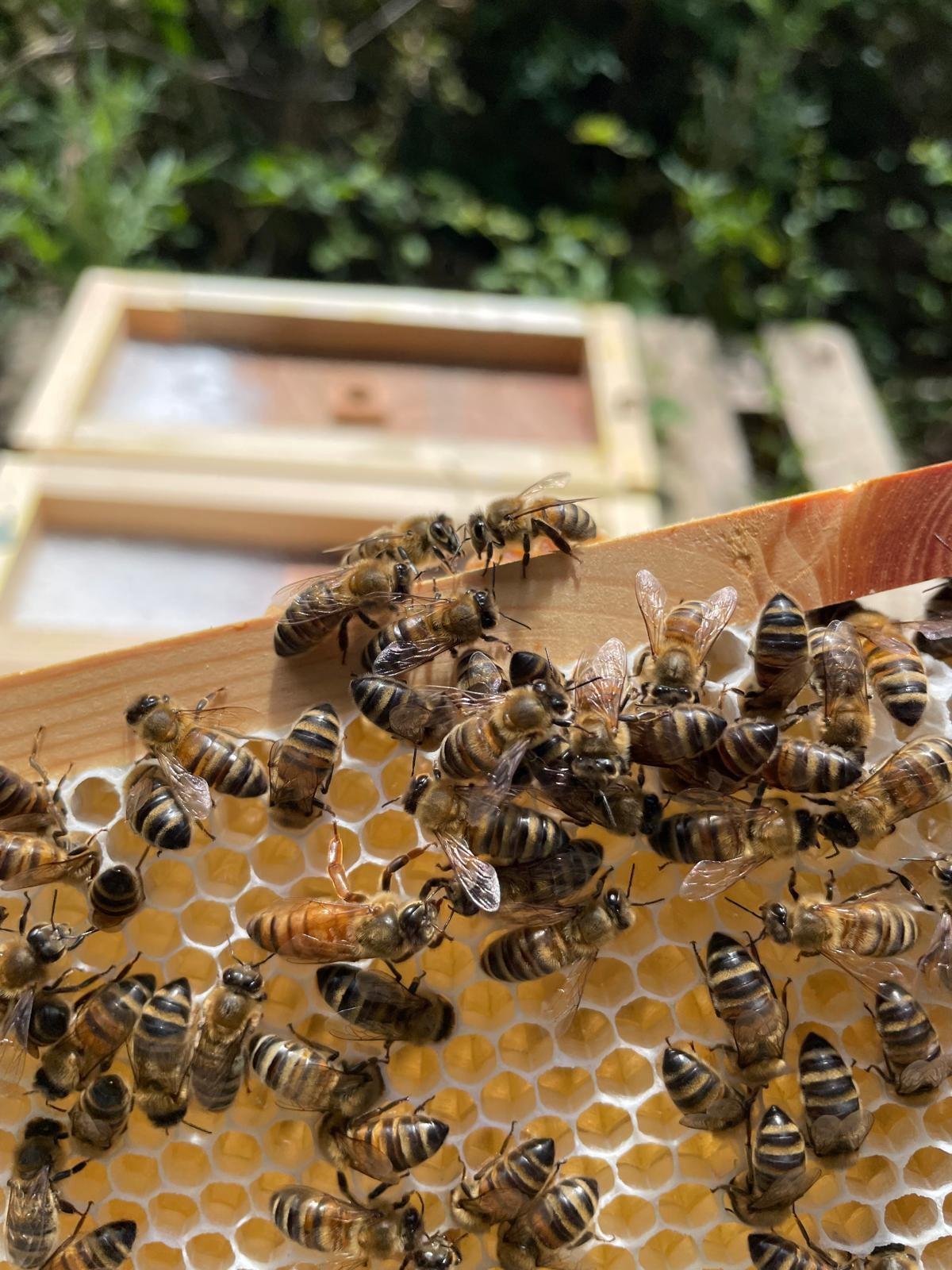
A quick guide to the queen types you will come across in the UK.
The queen sets the character of the whole colony. Her daughters decide how calm the bees are on the comb, how quickly the colony builds up in spring, how much honey they bring in and how well they get through winter. There is no single best queen. The right one depends on where you keep your bees, how much time you have, and what you want from them.
A good queen gives you:
If a colony becomes bad-tempered or the brood looks patchy, replacing the queen is often the quickest fix.
The daughter of a pure-bred Buckfast breeder queen, mated with local drones. F1 Buckfast colonies are calm on the comb, build up well in spring and are slow to swarm, which makes them a favourite with beginners and honey producers alike.
Good for: beginners, and anyone who wants calm, productive bees.
Very gentle bees that build up fast once spring arrives and use their stores carefully over winter. That quick spring growth means they need space early or they may swarm.
Good for: cooler sites, and beekeepers who can keep on top of spring inspections.
Buckfast queens reared and mated locally in Essex. The calm, productive Buckfast character, from queens raised in local conditions and used to our weather.
Good for: beekeepers who prefer UK-reared, locally mated queens.
Pure-bred breeder queens, the generation used to produce F1 daughters. Best for beekeepers who raise their own queens or want to improve their stock, rather than as a straightforward colony queen.
Good for: queen rearing and experienced beekeepers.
F1 Buckfast, Carnica and Essex Buckfast queens are £35 each with a £5 deposit to reserve. F0 Buckfast breeder queens are £450 with a £50 deposit. Queens go out in weekly rounds every Friday from 21st May to 20th August 2027, and we rear a maximum of 300 a season. See our queens, or email us at tudorshoney@gmail.com if you would like help choosing.